Dev Log – UI Module & SmartPtr
Dev Log – UI Module & SmartPtr
Context
Recently, I added two important features to my codebase:
- A UI module designed to be graphics-library agnostic, with a first implementation based on SFML
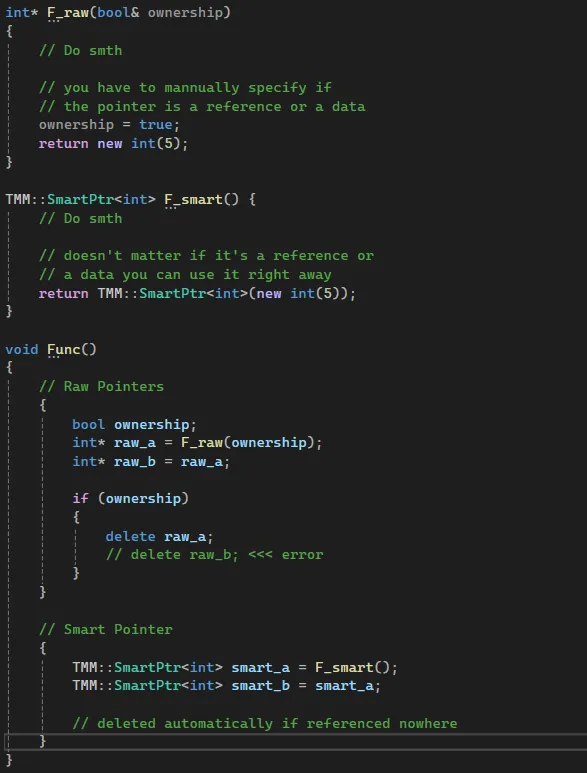
- A set of custom SmartPtr utilities aimed at simplifying memory management by removing the need for manual deletion
UI Module – Design Goals
The main idea behind this UI project was to have a fast, easy and ready UI lib that i can use in any projects i want.
Core objectives
- Separate UI logic from rendering backend
- Allow the same UI system to be reused with:
- SFML
- DirectX
- OpenGL
- or any other graphics API in the future
- Keep the UI code simple, readable, and extensible
This resulted in a design where:
- UI elements describe what they are
- The backend decides how they are rendered
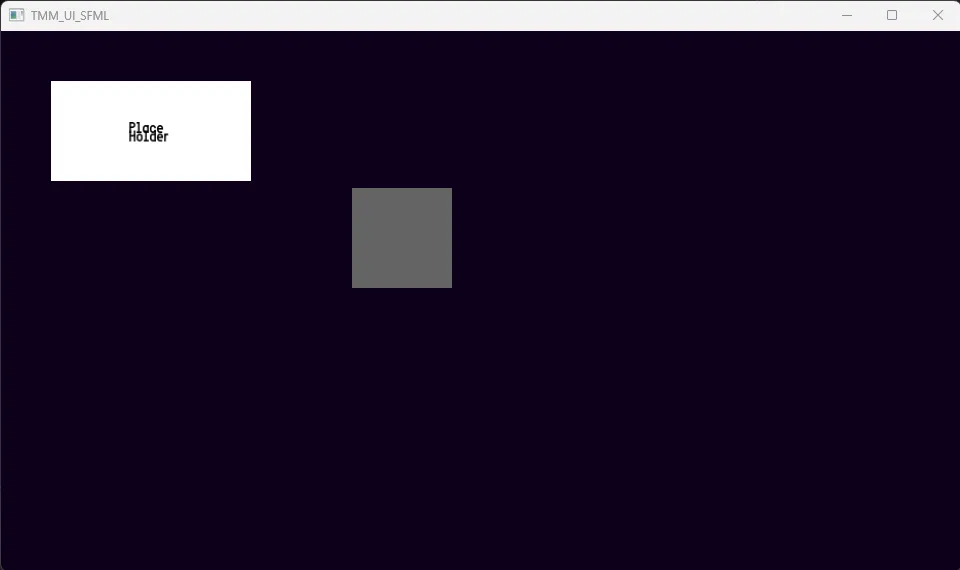
SFML Implementation
The first implementation of this UI system is based on SFML, chosen for its simplicity and fast iteration time.
This implementation handles:
- Window interaction
- Input events (mouse, keyboard)
- Rendering of basic UI elements
The UI logic itself does not depend on SFML, only the rendering layer does.
This makes SFML a replaceable backend, not a hard dependency.
Why a Modular UI?
Building this system early allows me to:
- Avoid rewriting UI logic when changing graphics APIs
- Reuse the same UI in different projects
- Experiment with multiple renderers while keeping a stable interface
This approach also aligns with how larger engines structure their UI systems.
SmartPtr – Motivation
In parallel, I introduced a set of custom SmartPtr utilities.
The goal was simple:
Never manually delete pointers again.
While C++ already provides smart pointers, this implementation is tailored to my own architecture and usage patterns, with this TMM_Library, my goal is to challenge myself to create as many features as I can without using the STL (Standard Library).
Trade-off
- Slightly higher memory usage
- In exchange for:
- No manual deletion
- Fewer memory leaks
- Fewer ownership-related bugs
- Clearer code intent
SmartPtr – Usage & Benefits
With these SmartPtr utilities:
- Object lifetime is managed automatically
- Ownership rules are explicit
- Code becomes easier to reason about
This allows me to focus on:
- Architecture
- Features
- Performance-critical paths
Instead of constantly worrying about memory cleanup.